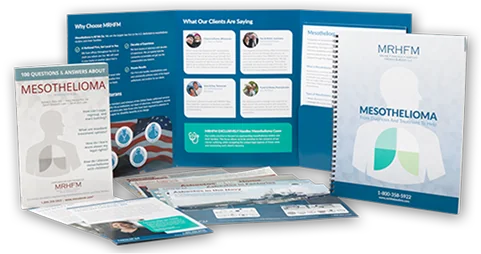




Everything you need to know:
80 page guide to finding the best treatment, doctors, and care
100 answers to the most frequently asked questions
10 questions you MUST ask your doctor right away
The Cancer Fighting Kitchen: $32.50
Things I Wish I’d Known: $19.95
The package we received on mesothelioma is excellent and very well put together. We knew nothing about mesothelioma and this was the greatest resource we could get.
Our Mesothelioma Care Package provides the latest information on top treatment options and ways others have improved life expectancy.
As mesothelioma treatments continue to improve every year, patients are living longer. Patients rely on different types and combinations of treatments, from traditional therapies such as chemotherapy and radiation, to emerging clinical trials that may lead to a cure in the future.
In tandem with researchers continuing to create, test, and refine new treatments every day, patients’ hope of an improved prognosis continues to rise.
Based on the patient’s diagnosis, doctors create an optimum course of treatment which accounts for the cancer stage, cell type, and location of the mesothelioma. Considered together, these factors help determine the types of treatment the patient might try.
A pleurectomy with decortication (P/D) is a surgery doctors use to remove the lining of the lung most affected by tumor growth along with any visible tumors on the surface of the lung itself. If mesothelioma has spread beyond the lining of your lung, your doctor may also remove parts of the diaphragm and pericardium, the protective lining of the heart. The goal of using a P/D is to relieve symptoms of mesothelioma without sacrificing the lung. 90 percent of patients who have the procedure experience a reduction of symptoms.
Doctors use an extrapleural pneumonectomy (EPP) to remove the entire lung and nearby tissue affected by mesothelioma. To prevent the disease from coming back, he or she may also remove the diaphragm, nearby lymph nodes, and the lining of the heart.
Surgeons use a peritonectomy to remove any part of the peritoneum — the protective lining of the abdomen — affected by tumor growth. They also remove any visible tumors that may have spread to nearby organs, like the diaphragm or stomach.
Cytoreductive surgery combines multiple peritonectomies to completely remove mesothelioma from the abdominal cavity. Doctors often combine cytoreductive surgery with heated chemotherapy in a procedure called cytoreduction with HIPEC to maximize its effectiveness.
There is a difference in administration between systemic chemotherapy and intraoperative chemotherapy:
Systemic – Given through pills or an IV, systemic chemotherapy travels through your bloodstream, attacking cancer cells it comes in contact with.
Intraoperative – Administered during surgery, intraoperative chemotherapy is applied directly into the lung or abdominal cavity. It’s also usually heated to increase its cancer-killing effectiveness.
Chemotherapy, the use of drugs to attack and kill cancer, is the most effective when administered to match the diagnosis, specifically regarding the cancer stage and location of the mesothelioma. Chemotherapeutic drugs work better when they are combined with other drugs or with surgery.
Chemotherapy can be used before surgery (neoadjuvant), during surgery (intraoperative), or after surgery (adjuvant).
Depending on your tolerance, chemotherapy may affect you severely, mildy, or not at all. Its side effects disappear slowly after treatment and vary according to the type of drug, amount of dose, and length of time it’s given.
Common side effects experienced during chemotherapy are:
The use of high energy rays to kill mesothelioma cells is called radiation therapy. It can be used by itself as a palliative treatment or combined with chemotherapy and/or surgery. Some types of radiation therapy allow doctors to target tumors, minimizing damage to healthy cells and reducing harmful side effects.
Radiation therapies commonly used for mesothelioma patients include:
Using 3D scans of the tumor, doctors customize the amount and intensity of each radiation dose according to the tumor’s size and shape. This customization allows doctors to target tumors more effectively and minimizes damage to healthy, non-cancerous cells surrounding the tumors.
IMRT is an advanced form of 3D-CRT. Doctors use computers to adjust the amount and intensity of a radiation beam as it passes over a tumor. Researchers in a recent study showed that IMRT used after an extrapleural pneumonectomy (EPP) produced a median overall survival rate of just over 2 years. Of these patients, 41 percent survived an additional 3 years after the procedure.
In order to get the same cancer-killing effectiveness as chemotherapeutic drugs, doctors have to use high doses of radiation. The higher the intensity of radiation applied, the higher the chances it could damage healthy cells and the increased likelihood of more side effects.
Radiation therapy can cause the following side effects:
Even if traditional treatments such as surgery or chemotherapy aren’t an option, you can still participate in a clinical trial. Every current drug in use for mesothelioma started as a clinical trial so this may be your best option for improving your prognosis. Clinical trials allow researchers to develop new ways to fight mesothelioma including immunotherapy, a treatment that strengthens your immune system and helps kill mesothelioma cells.
Palliative treatments relieve the pain caused by symptoms at all stages of mesothelioma. They can be used as a complement to curative treatments for patients diagnosed with stage 1 or stage 2 mesothelioma. Palliative treatments can also be used to reduce pain and increase the quality of life for stage 3 and stage 4 patients.
Several types of palliative treatments are available to mesothelioma patients:
A thoracentesis is the draining of excess fluid from the pleural cavity — the space between the inner and outer lining of the lungs — with a needle. It reduces pressure caused by too much fluid, which pushes on the lung and makes it difficult to breath.
Assisted by a camera, the doctor drains excess fluid from the pleural cavity and seals it with talc powder. The talc causes an inflammatory reaction that closes the pleural space. Over time, scar tissue forms and prevents more fluid from collecting there. Doctors use this procedure to reduce chest pain and relieve pressure caused by buildups of fluid.
When tumor growth hardens the lung’s lining, it can make breathing difficult. A partial pleurectomy removes the lining of a lung affected by mesothelioma and lets the lung re-expand to make breathing easier.
A paracentesis uses a needle to drain off excess fluid from the abdominal cavity and ease the pressure caused by the buildup of fluid in this space. Too much fluid in the abdominal cavity creates pressure on the organs, causing intense discomfort and pain.
Mesothelioma Cancer Community, Sponsored by Maune Raichle Hartley French & Mudd, LLC.
Disclaimer: The information provided by MesotheliomaCancer.org is not a substitute for professional medical advice.
If you or someone you love has been diagnosed with mesothelioma, you want to know what your best treatment options are and how you can extend and maintain the best quality of life. Our Mesothelioma Care Package gives you all of those answers and more — for free.
As mesothelioma treatments continue to improve every year, patients are living longer. Patients rely on different types and combinations of treatments, from traditional therapies such as chemotherapy and radiation, to emerging clinical trials that may lead to a cure in the future.
In tandem with researchers continuing to create, test, and refine new treatments every day, patients’ hope of an improved prognosis continues to rise.
Based on the patient’s diagnosis, doctors create an optimum course of treatment which accounts for the cancer stage, cell type, and location of the mesothelioma. Considered together, these factors help determine the types of treatment the patient might try.
A pleurectomy with decortication (P/D) is a surgery doctors use to remove the lining of the lung most affected by tumor growth along with any visible tumors on the surface of the lung itself. If mesothelioma has spread beyond the lining of your lung, your doctor may also remove parts of the diaphragm and pericardium, the protective lining of the heart. The goal of using a P/D is to relieve symptoms of mesothelioma without sacrificing the lung. 90 percent of patients who have the procedure experience a reduction of symptoms.
Doctors use an extrapleural pneumonectomy (EPP) to remove the entire lung and nearby tissue affected by mesothelioma. To prevent the disease from coming back, he or she may also remove the diaphragm, nearby lymph nodes, and the lining of the heart.
Surgeons use a peritonectomy to remove any part of the peritoneum — the protective lining of the abdomen — affected by tumor growth. They also remove any visible tumors that may have spread to nearby organs, like the diaphragm or stomach.
Cytoreductive surgery combines multiple peritonectomies to completely remove mesothelioma from the abdominal cavity. Doctors often combine cytoreductive surgery with heated chemotherapy in a procedure called cytoreduction with HIPEC to maximize its effectiveness.
There is a difference in administration between systemic chemotherapy and intraoperative chemotherapy:
Systemic – Given through pills or an IV, systemic chemotherapy travels through your bloodstream, attacking cancer cells it comes in contact with.
Intraoperative – Administered during surgery, intraoperative chemotherapy is applied directly into the lung or abdominal cavity. It’s also usually heated to increase its cancer-killing effectiveness.
Chemotherapy, the use of drugs to attack and kill cancer, is the most effective when administered to match the diagnosis, specifically regarding the cancer stage and location of the mesothelioma. Chemotherapeutic drugs work better when they are combined with other drugs or with surgery.
Chemotherapy can be used before surgery (neoadjuvant), during surgery (intraoperative), or after surgery (adjuvant).
Depending on your tolerance, chemotherapy may affect you severely, mildy, or not at all. Its side effects disappear slowly after treatment and vary according to the type of drug, amount of dose, and length of time it’s given.
Common side effects experienced during chemotherapy are:
The use of high energy rays to kill mesothelioma cells is called radiation therapy. It can be used by itself as a palliative treatment or combined with chemotherapy and/or surgery. Some types of radiation therapy allow doctors to target tumors, minimizing damage to healthy cells and reducing harmful side effects.
Radiation therapies commonly used for mesothelioma patients include:
Using 3D scans of the tumor, doctors customize the amount and intensity of each radiation dose according to the tumor’s size and shape. This customization allows doctors to target tumors more effectively and minimizes damage to healthy, non-cancerous cells surrounding the tumors.
IMRT is an advanced form of 3D-CRT. Doctors use computers to adjust the amount and intensity of a radiation beam as it passes over a tumor. Researchers in a recent study showed that IMRT used after an extrapleural pneumonectomy (EPP) produced a median overall survival rate of just over 2 years. Of these patients, 41 percent survived an additional 3 years after the procedure.
In order to get the same cancer-killing effectiveness as chemotherapeutic drugs, doctors have to use high doses of radiation. The higher the intensity of radiation applied, the higher the chances it could damage healthy cells and the increased likelihood of more side effects.
Radiation therapy can cause the following side effects:
Even if traditional treatments such as surgery or chemotherapy aren’t an option, you can still participate in a clinical trial. Every current drug in use for mesothelioma started as a clinical trial so this may be your best option for improving your prognosis. Clinical trials allow researchers to develop new ways to fight mesothelioma including immunotherapy, a treatment that strengthens your immune system and helps kill mesothelioma cells.
Palliative treatments relieve the pain caused by symptoms at all stages of mesothelioma. They can be used as a complement to curative treatments for patients diagnosed with stage 1 or stage 2 mesothelioma. Palliative treatments can also be used to reduce pain and increase the quality of life for stage 3 and stage 4 patients.
Several types of palliative treatments are available to mesothelioma patients:
A thoracentesis is the draining of excess fluid from the pleural cavity — the space between the inner and outer lining of the lungs — with a needle. It reduces pressure caused by too much fluid, which pushes on the lung and makes it difficult to breath.
Assisted by a camera, the doctor drains excess fluid from the pleural cavity and seals it with talc powder. The talc causes an inflammatory reaction that closes the pleural space. Over time, scar tissue forms and prevents more fluid from collecting there. Doctors use this procedure to reduce chest pain and relieve pressure caused by buildups of fluid.
When tumor growth hardens the lung’s lining, it can make breathing difficult. A partial pleurectomy removes the lining of a lung affected by mesothelioma and lets the lung re-expand to make breathing easier.
A paracentesis uses a needle to drain off excess fluid from the abdominal cavity and ease the pressure caused by the buildup of fluid in this space. Too much fluid in the abdominal cavity creates pressure on the organs, causing intense discomfort and pain.
Mesothelioma is treated with drug therapy, surgery in some cases, radiation, and care that eases symptoms. Pleural mesothelioma grows in the lining around the lungs, and the usual first step is immunotherapy or chemotherapy. Immunotherapy helps the immune system fight cancer, and chemotherapy uses cancer-killing drugs. Peritoneal mesothelioma grows in the lining of the abdomen. Experienced centers often treat it with surgery plus heated chemotherapy. Draining fluid and radiation also ease pain and breathlessness.
For most people, no. The National Cancer Institute says treatment for all but localized mesothelioma is generally not curative. For a small number of people, the disease is still limited to one area. At a specialist center, treatment may then aim at long-term control, and only a specialist can say if that applies. There is no cure rate to quote, but treatment has improved. In the CheckMate 743 trial, 14% of people given immunotherapy were alive five years later, against 6% on chemotherapy.
There is no single best treatment for mesothelioma. The right plan depends on where the cancer is, how far it has spread, its cell type, and your loved one's health. For pleural mesothelioma that surgery cannot remove, the usual first drugs are nivolumab plus ipilimumab, which are immunotherapy. Pembrolizumab added to chemotherapy is the other approved first option. For peritoneal mesothelioma, surgery with heated chemotherapy has the best reported results, though only from hospital series. Ask a team that treats mesothelioma often, and get a second opinion.
The newest FDA-approved mesothelioma treatment is pembrolizumab, an immunotherapy drug, given with pemetrexed and platinum chemotherapy. It was approved on September 17, 2024, and nothing has been approved since. Nivolumab plus ipilimumab was approved in October 2020. Optune Lua, a wearable device, was authorized in 2019 under a Humanitarian Device Exemption, which asks only for probable benefit. That is not proof of benefit, and the study behind it had no comparison group. The device has never been shown to help people live longer.
Doctors test for mesothelioma with imaging first, then with a tissue sample. A chest x-ray usually comes first, followed by a CT scan. A PET or MRI scan is sometimes added to tell cancer from scar tissue. If fluid has built up, some can be drawn off with a needle and examined. But it is often hard to diagnose mesothelioma from fluid alone. A firm diagnosis nearly always needs a biopsy with special lab stains.
There are three main mesothelioma operations. Pleurectomy and decortication, called P/D, removes the lining around the lung and keeps the lung. Extrapleural pneumonectomy, called EPP, also removes the lung, the diaphragm, and the covering of the heart. P/D is used more often, because EPP causes more serious side effects and is not more likely to cure. For the abdomen, cytoreductive surgery removes visible tumor, usually with heated chemotherapy washed through the belly, called HIPEC. Draining fluid eases breathing and is not a lesser option.
For pleural mesothelioma, the best trial evidence does not show that surgery helps people live longer. MARS 2 randomly assigned 335 people to extended P/D plus chemotherapy, or to chemotherapy alone. Median survival, the midpoint where half the group lived longer and half less, was 19.3 months with surgery and 24.8 months without. Serious complications were about 3.6 times as common with surgery. MARS 2 tested one operation, and the National Cancer Institute says EPP may still help selected early-stage patients.
No. A lung transplant is not a treatment for mesothelioma. The cancer grows in the pleura, the lining that wraps the lung and coats the chest wall. Replacing the lung would leave the cancer behind. Transplant programs also require a person to be free of active cancer, usually for years, because anti-rejection medicines let cancer grow faster. This is hard to hear, but knowing it now means energy can go to immunotherapy, chemotherapy, radiation, symptom care, and clinical trials.
Immunotherapy is now a standard first treatment for pleural mesothelioma that surgery cannot remove, and it helps some people live longer. The CheckMate 743 trial enrolled 605 people with advanced disease who had not been treated before. Half received nivolumab plus ipilimumab, half received chemotherapy. Median survival was 18.1 months with immunotherapy and 14.1 months with chemotherapy. At five years, 14% of the immunotherapy group were alive, against 6% on chemotherapy. Tumors shrank about as often in both groups, so the gain is in how long responses last.
The most common side effects of immunotherapy for mesothelioma are fatigue, rash, itching, diarrhea, nausea, and joint pain. These drugs take a brake off the immune system, which can then attack the lungs, bowel, liver, hormone glands, or kidneys. The American Cancer Society says these reactions can be serious or even life threatening. In CheckMate 743, grade 3 or 4 effects, meaning severe ones, hit 91 of 300 people on immunotherapy. Chemotherapy caused them in 91 of 284, a similar rate but different problems. Report any new symptom right away.
Chemotherapy for mesothelioma can shrink tumors and add months of life, but it rarely makes the cancer go away. In the 2003 trial that made pemetrexed plus cisplatin standard, 456 people took part and 448 received treatment. Tumors shrank in 41.3% given the combination and 16.7% given cisplatin alone. Median survival, the midpoint for the group, was 12.1 months against 9.3 months. That trial is over twenty years old, and chemotherapy today is often given with immunotherapy. Side effects include nausea, fatigue, low blood counts, and nerve tingling.
If mesothelioma grows again after the first treatment, there are usually still options. What is offered depends on what your loved one has already had. If treatment started with immunotherapy, chemotherapy may be next, and the other way around. Radiation and fluid drainage can ease symptoms at any point. Clinical trials are an option at every stage, so ask early. Cancer vaccines, gene therapy, and CAR T-cell therapy stay unapproved and unproven, and are only offered in trials.
Palliative treatment for mesothelioma is care that eases symptoms rather than removing the cancer. It can start on the day of diagnosis. It includes draining fluid from around the lung or the abdomen, and sealing that space so fluid stops returning. It also includes radiation for pain and breathlessness, and medicines for pain, nausea, and appetite. It is not hospice, and it is given alongside chemotherapy or immunotherapy, not instead of them. Asking for a palliative care referral early is one of the most useful things you can do.
The most reliable way to find a mesothelioma specialist is to start at an NCI-designated cancer center. There are 74 in the United States, 58 of them comprehensive. Programs with dedicated mesothelioma expertise include the International Mesothelioma Program at Brigham and Women's Hospital, Memorial Sloan Kettering, and MD Anderson. Volume matters. The National Cancer Institute reports that death from the operation itself is under 2% after P/D and 6% to 30% after EPP. NCI staff will help you search free at 1-800-4-CANCER.
There is no single price for mesothelioma treatment. Cost depends on the drugs used, whether surgery is involved, how long treatment lasts, and your insurance. Private insurance and Medicare cover most standard treatment, but you can still owe deductibles, copays, and travel costs. Specialist centers are sometimes out of network, so ask before the first visit. In a trial, the National Cancer Institute says insurance often covers routine care, and the sponsor may pay research costs. Ask the hospital for a financial navigator.
Mesothelioma Cancer Community, Sponsored by Maune Raichle Hartley French & Mudd, LLC.
Disclaimer: The information provided by MesotheliomaCancer.org is not a substitute for professional medical advice.