






Get Help With Malignant Mesothelioma​

Top 10 Questions to Ask Your Doctor About Mesothelioma

    Answer 3 quick questions and we'll ship your free care package today:

    Have you or someone you know been diagnosed with mesothelioma?

    Thank You!
    We will send you your free guide shortly.
    Answer 3 quick questions and we'll ship your free care package today:

      Who has been diagnosed?

      Thank You!
      We will send you your free guide shortly.
      Get your free care package! Just answer 2 quick questions below:

        What is your diagnosis?

        Thank You!
        We will send you your free guide shortly.

        Real Answers — and Real Help — for People With Mesothelioma.

        If you or someone you love has been diagnosed with mesothelioma, you want answers. You want to know where the best treatment options are and what can be done to help extend and maintain the best quality of life.

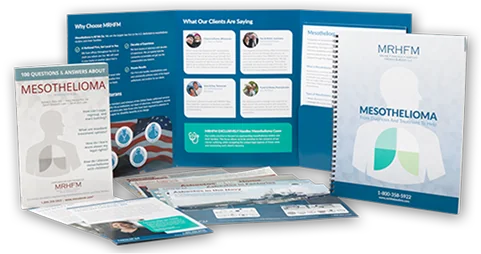
        In our Mesothelioma Care Kit and Package, you can find answers,  valuable resources,  and more — for free.

        Our Mesothelioma Care Package provides the latest information on top treatment options and ways others have improved life expectancy.

        Get help for you and your family now.

        Getting a proper diagnosis.

        Diagnosing mesothelioma can be difficult for a number of reasons. Symptoms often take a long time to appear, typically 10 to 50 years or more after exposure to asbestos, the symptoms of mesothelioma are common in several other illnesses. Because the symptoms are nonspecific, most patients are diagnosed with the disease at an advanced stage. Once diagnosed, your doctor will have identified one of three types of mesothelioma: pleural, peritoneal or pericardial. Each has its own distinct set of symptoms.

        Pleural Mesothelioma

        Pleural Mesothelioma affects the protective lining of the lungs, the pleura. It’s the most common location where the disease occurs — about 75 percent of all diagnosed cases are pleural. Those diagnosed with pleural mesothelioma will typically have the most treatment options available.

        Learn More

        Peritoneal Mesothelioma

        Peritoneal mesothelioma affects the protective lining of the abdominal cavity, the area of your body containing several organs including the stomach, intestines, kidneys, and liver. It’s the second most common location where mesothelioma grows—about 20 to 24 percent of all mesotheliomas occur here.

        Learn More

        Pericardial Mesothelioma

        Pericardial mesothelioma affects the protective lining of the heart. It’s one of the rarest locations where mesothelioma occurs and accounts for about 1 percent of all cases. Because it’s rare, doctors don’t get to treat many patients with mesothelioma in this location and haven’t had as many chances to create effective treatments.

        Testicular Mesothelioma

        Testicular Mesothelioma, in the tunica vaginalis — the membrane that surrounds the testes makes up less than 1 percent of diagnosed cases. It can be diagnosed by the appearance of a lump in the scrotum, swelling of the testicles and pain in that area. Due to its rarity, physicians have limited experience treating patients with mesothelioma in this location, leading to fewer opportunities to develop effective treatments.

        Pleural Mesothelioma accounts for about 75% of all mesothelioma diagnoses.

        Learn more in your care kit

        The 4 Stages of Mesothelioma

        Knowing your cancer stage is an important part of your diagnosis because it determines how effective your treatment will be. Although there isn’t a specific staging system for mesothelioma, doctors have used a number of systems — TNM, Butchart, and Brigham — to divide the spread of cancer into 4 stages. For the most part, the earlier the stage, the less mesothelioma has spread, the easier it is for surgeons to remove — and the better your prognosis will be.

        Stage 1
        • This stage indicates the tumor is only in the mesothelium where it originated and hasn’t yet spread.
        • A stage-one mesothelioma diagnosis means a patient should respond well to treatment and should enjoy a better prognosis than patients with more advanced diagnoses.
        Stage 2
        • At stage two, the tumor has grown larger and may have spread to organs outside the area of where it first appeared in the mesothelium.
        • There isn’t a substantial difference in prognosis between stage-one and stage-two patients and curative surgery is still an option.
        Stage 3
        • At stage three, the tumor has spread throughout one side of a patient's body and possibly other areas including nearby lymph nodes, the esophagus, the chest wall, ribs, or heart.
        • Curative treatments including chemotherapy may no longer be effective at this stage, but surgery may still be an option. Palliative treatment will likely be the best option to improve your quality of life.
        Stage 4
        • At stage four, the tumor has spread to both sides of the body. It may have invaded the brain, bone cells, far away lymph nodes, and other organ tissues.
        • Because it has spread so far, curative treatments such as surgery and chemotherapy are not effective in removing stage four mesothelioma. Doctors will instead use palliative treatment to relieve discomfort caused by symptoms. They may also enroll a patient in a clinical trial where they’ll use new treatments to try and improve a prognosis.

        Mesothelioma Treatment Options

        Mesothelioma treatment falls into one of two categories: curative or palliative. A mesothelioma specialist will prescribe the optimal treatment option based upon your diagnosis and staging.

        Curative Treatment

        Curative treatments seek to extend survival time by removing as much of the mesothelioma as possible. Typically multiple curative treatments are combined to achieve better results.

        Palliative Treatment

        Palliative treatment addresses the symptoms of mesothelioma rather than the cancer itself. By easing symptoms such as chest or abdominal pain, doctors can help improve your quality of life.

        Doctors never use a one-size-fits-all approach for mesothelioma treatment because the disease affects each patient so differently. Factors like the cancer stage, cell type, and location of the mesothelioma all play an important role in your treatment and will help determine how your doctor uses treatments like surgery, chemotherapy, or radiation therapy.

        Surgery

        Surgery is most effective if you’re diagnosed with stage 1 or stage 2 mesothelioma as the disease hasn’t spread far beyond the lining of the lungs, abdomen, or heart. For stage 3 or 4 mesothelioma, doctors use surgery to remove obstructive tumors and improve quality of life.

        Chemotherapy

        Doctors use chemotherapy to shrink tumors, making their removal with surgery easier and more efficient. They also use it as a palliative measure to shrink tumors that restrict breathing or cause excessive abdominal pain.

        Radiation Therapy

        Like chemotherapy, radiation therapy helps doctors remove tumors and relieve discomfort caused by their obstructive growth.

        Multimodal Therapy

        Multimodal therapy is a combination of two or more treatments. Doctors have greatly increased the life expectancy of patients with pleural and peritoneal mesothelioma using multimodal therapy.

        Emerging Treatments

        Emerging treatments can benefit patients diagnosed with any stage of mesothelioma but may especially improve the prognosis for those with advanced-stage mesothelioma. 

        You or your loved one might have more treatment options than you think.

        Get your Mesothelioma Package now

        Improving Your Prognosis

        Your prognosis, an estimate your doctor makes on how your diagnosis will progress based upon how similar diagnoses have affected other people in the past. Factors including the cancer stage, cell type, and location of the mesothelioma all play an important role in determining which treatments your doctor recommends.

        It’s important to remember that your prognosis isn’t set in stone. You can take action to change it by :

        • Getting more exercise and eating healthy
        • Reviewing all your treatment options
        • Seeing a top mesothelioma specialist 

        Frequently Asked Questions About Mesothelioma

        What is mesothelioma?

        Mesothelioma is a rare cancer that starts in the mesothelium, the thin lining that covers organs inside the chest and belly. It can also begin in the lining around the heart or the testicles, though that is rare. Most cases are caused by breathing in or swallowing asbestos fibers, often decades earlier. About 2,700 cases were reported in the United States in 2022, the most recent year in the CDC's count. Most begin in the lining around the lungs. Treatment has improved, and real support is there.

        Is mesothelioma cancer?

        Yes. Mesothelioma is cancer, which means it grows into nearby tissue and can spread. Since 2021 the World Health Organization has used the single word mesothelioma, because every tumor with that name counts as cancerous. You will still see the older phrase malignant mesothelioma, and it means the same thing. A few rare mesothelial growths are not cancer, such as adenomatoid tumors, and they were given separate names on purpose. A report may also say mesothelioma in situ, which means abnormal cells sit on the surface and have not grown in yet.

        What type of cancer is mesothelioma?

        Mesothelioma is a cancer of the mesothelial cells that line your body's internal spaces. Doctors sort it two ways, by where it starts and by how the cells look under a microscope. Epithelioid cells look rounded and orderly, and make up about 6 in 10 cases. Sarcomatoid cells look long and spindly, about 1 in 10. Biphasic tumors hold both patterns, about 3 in 10. Those shares come from the American Cancer Society, which also notes epithelioid usually has the better outlook.

        Is mesothelioma lung cancer?

        No. Mesothelioma is not lung cancer. It starts in the pleura, the thin lining around the lungs and inside the chest wall, not in the lung itself. That difference matters, because mesothelioma is staged differently, treated with different drugs and operations, and handled by different specialists. Asbestos can cause both diseases, and they can look alike on a scan. So a biopsy and special stains are used to tell them apart.

        What are the types of mesothelioma?

        There are four main types of mesothelioma, named for where the cancer starts. Pleural mesothelioma begins in the lining around the lungs and is by far the most common. Peritoneal mesothelioma begins in the lining of the abdomen (belly). Pericardial and testicular mesothelioma, in the linings around the heart and the testicles, are both very rare. Of US cases reported from 2003 through 2022, the CDC counted 81 percent pleural and 11 percent peritoneal. Pericardial and testicular were 0.2 percent each, and about 8 percent were logged at other or unrecorded sites.

        How do you get mesothelioma?

        Most people who develop mesothelioma were exposed to asbestos, though not everyone can point to where or when. Exposure often happened at work, in trades like construction, shipyards, insulation, plumbing, railroads, or auto repair. Tiny fibers are breathed in or swallowed. They settle in the lining of the lungs or belly and damage those cells slowly, over decades. Family members have become ill from fibers carried home on work clothes. Other cases follow erionite, a mineral like asbestos, past radiation to the chest, or no known exposure.

        How long after asbestos exposure does mesothelioma appear?

        Mesothelioma usually appears 20 to 50 years after a person's first asbestos exposure. That long delay is why the average age at diagnosis for mesothelioma in the chest is about 70. Mesothelioma in the belly tends to be found earlier, with most patients in their 50s. Those three figures are the American Cancer Society's. The delay is also why many people cannot recall the exposure that caused it. A job your loved one left forty years ago can still be the reason, and they could not have known.

        Is mesothelioma hereditary?

        Mesothelioma is usually not inherited, and having a relative with it does not mean you will get it. In one study of 198 patients at specialist centers, 12 percent carried an inherited change in a cancer gene. The most common was a gene called BAP1, in about 3 percent of those 198 people. Most had no inherited change at all. If a pathology report says BAP1 is lost, that describes the tumor itself, not something passed down. Ask about genetic counseling if several close relatives have had mesothelioma, or eye or skin cancers.

        Is mesothelioma contagious?

        No. Mesothelioma is not contagious. You cannot catch it from your loved one by hugging, kissing, sharing meals, or breathing the same air. Cancer cells from one person cannot survive in another person's body. What does travel between people is asbestos dust, which is why some family members were exposed by fibers on work clothes. Being close to someone who has mesothelioma is completely safe.

        How do you know if you have mesothelioma?

        The only way to know for certain if you have mesothelioma is a biopsy. A doctor removes a small piece of tissue, and a pathologist, a doctor who studies cells, examines it. The signs that lead to testing are shortness of breath, chest or side pain, and a cough that will not settle. In the belly, the signs are swelling, pain, and weight loss. Doctors usually start with a chest x-ray or CT scan. Fluid drawn from around the lung can help, but it often misses the diagnosis, so tissue is needed.

        What does mesothelioma look like?

        Mesothelioma is mostly hidden inside the body, so there is usually nothing to see from the outside. If you are asking because you dread what you might see, that is the honest answer. What families do sometimes notice is weight loss, or a belly that swells with fluid. On a CT scan it shows as fluid around the lung, called an effusion. The lining thickens and can wrap the lung like a rind. Under a microscope the cells look much like lung cancer, so special stains are used.

        How is mesothelioma treated?

        Mesothelioma is usually treated with a combination of drugs, sometimes along with surgery or radiation. Chemotherapy uses drugs that kill fast-growing cells, and immunotherapy helps the body's own immune system attack the cancer. For pleural mesothelioma that surgery cannot remove, two drug pairs are standard first treatments. One is nivolumab with ipilimumab, and the other is pembrolizumab with chemotherapy, which the FDA approved in September 2024. Which one fits your loved one depends on cell type and general health.

        Is mesothelioma curable?

        For most people mesothelioma is not curable. The National Cancer Institute says standard treatment for all but localized mesothelioma is generally not curative. When the disease is caught early and still limited to one area, a specialist center may aim for long-term control. Only a specialist can say whether that applies. Treatment has improved too, and clinical trials are open. In the CheckMate 743 trial of pleural mesothelioma, 14 percent on immunotherapy were alive at five years, versus 6 percent on chemotherapy.

        How does mesothelioma kill you?

        Mesothelioma most often leads to death through breathing that slowly gets harder. As the tumor thickens the lining around the lung, the lung cannot fill and fluid gathers in the same space. In the belly the pattern is swelling and bowel trouble instead of breathlessness. Most of these symptoms can be controlled, often by draining the fluid or sealing the space. Palliative care means comfort care given alongside treatment at any stage. Hospice is comfort care near the end, and both teams treat pain and breathlessness well.

        What should you do first after a mesothelioma diagnosis?

        The most useful first step is to get to a cancer center that treats mesothelioma often. The disease is rare, and experience changes what is offered. Ask for a second opinion, including a second look at the biopsy slides, because mesothelioma is easy to confuse with other cancers. Ask what cell type your loved one has, and what stage, meaning how far it has spread. Ask about clinical trials, which are studies of newer treatments. Ask for palliative care early too, for comfort alongside treatment.