






The 4 Stages Of Mesothelioma

3 Things You Need to Know About Mesothelioma Stages

    Answer 3 quick questions and we'll ship your free care package today:

    Have you or someone you know been diagnosed with mesothelioma?

    Thank You!
    We will send you your free guide shortly.
    Answer 3 quick questions and we'll ship your free care package today:

      Who has been diagnosed?

      Thank You!
      We will send you your free guide shortly.
      Get your free care package! Just answer 2 quick questions below:

        What is your diagnosis?

        Thank You!
        We will send you your free guide shortly.

        If you or someone you know has been diagnosed with mesothelioma, you want to know how far along the cancer is and what your best treatment options are. You want informed advice and trusted answers on how you can maintain the best quality of life. And you can find it all right here — for free — in our Mesothelioma Care Kit and Package.

        Our complimentary Mesothelioma Care Package provides clear information on the stages of mesothelioma.

        Learn More About the 4 Stages of Mesothelioma

        Why Cancer Stage is Important

        Knowing your cancer stage is important because it helps doctors determine available treatment options and how effective those options will be.

        Early-stage mesothelioma is typically eligible for traditional treatments like surgery, chemotherapy, radiation therapy—all of which can extend your life expectancy. Advanced-stage mesothelioma means traditional treatments may not be an option, but clinical trials may be, including newer treatments like immunotherapy.

        As a patient diagnosed with mesothelioma, the goal is always to find the most effective treatment options. Knowing factors like the cancer stage, cell type, and location of the mesothelioma are all crucial to you having the best possible outcome.

        Staging Mesothelioma

        Cancer staging is an important part of a diagnosis because it determines treatment options. Although there isn’t a specific staging system for mesothelioma, doctors have used a number of systems — TNM, Butchart, and Brigham — to divide the spread of cancer into 4 stages. As a guide, the earlier the stage, the less mesothelioma has grown or spread. The spread of cancer is called metastasis. The less it has spread, the easier it is for surgeons to remove which greatly improves the prognosis.

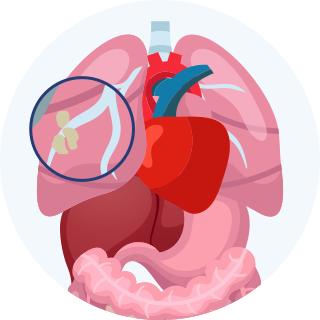
        • Stage 1: At the earliest stage, there’s no spread to lymph nodes and the cancer is localized to one side of the body. Stage 1 patients have the most treatment options.
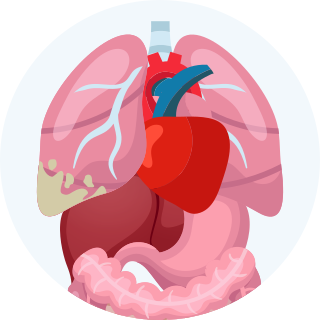
        • Stage 2: Mesothelioma is still localized to one side of the body but there are signs of metastasis to nearby lymph nodes. Aggressive treatment options are still an option.
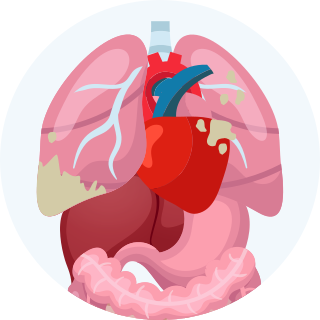
        • Stage 3: The first significant signs of metastasis have occurred. Mesothelioma has spread to lymph nodes and surrounding organs. Surgical options become limited.
        • Stage 4: Mesothelioma has spread to the other side of the body. Treatment options for stage 4 patients primarily involve relieving symptoms and improving quality of life

        Whether you’re diagnosed as being in the early part of stage 1 or the latter part of stage 4, there’s always hope. Get your Mesothelioma Care Package and find the best treatment options for your diagnosis.

        Learn how you can fight Mesothelioma with your Free Care Package

        Understanding the Stages of Pleural Mesothelioma

        Stage 1

        The growth of stage 1 pleural mesothelioma is limited to the lining of one lung. During stage 1 the tumor can also spread from the outer lining of the lung (closer to the wall of your chest) to the inner lining (closer to the lung itself).

        Because stage 1 tumors are more responsive to curative treatment such as surgery, chemotherapy, or radiation therapy, patients have the most favorable prognosis compared to more advanced stages of the disease.

        Stage 2

        In stage 2, most of the growth still occurs in the lining of one lung but the cancer cells may have spread to the walls of the patient’s chest, diaphragm, nearby lymph nodes, or to the lung itself.

        Patients have a similar prognosis to patients with stage 1 and are still eligible for curative treatments which can extend life expectancy.

        Stage 3

        At stage 3, a tumor has spread throughout one side of the body and has invaded at least one—or all—of the following: one lung, the diaphragm, nearby lymph nodes, and the protective lining of the heart.

        The prognosis of patients diagnosed with stage 3 mesothelioma is closely linked to age and general health. Healthy patients who can withstand surgery may be eligible for treatments that can extend life expectancy well past the average.

        Stage 4

        In stage 4 mesothelioma, the cancer cells and secondary tumors have spread far beyond the lining of one lung and may exist in larger sections of the chest wall, diaphragm, lining of the heart, and lymph nodes located far from the lining of the lung.

        The average life expectancy for patients diagnosed with stage 4 mesothelioma is less than 12 months. At this stage, traditional curative treatment options like surgery may not be viable, but patients do have other options. Palliative treatments are designed to ease pain and have shown prognostic benefits in some cases.

        Knowing your stage of pleural mesothelioma is the first step in finding the best treatment. Get your free Mesothelioma Care Package and find answers and hope.

        Find the best treatment options

        Peritoneal and Pericardial Mesothelioma Staging

        Because peritoneal and pericardial mesothelioma make up about 20-25% of all cases, doctors don’t typically use stages to describe their spread. But in the last decade, researchers have introduced a 3-stage system for peritoneal mesothelioma.

        • Stage 1: Minimal cancerous tissue found inside abdominal lining but lymph nodes are cancer free.
        • Stage 2: Moderate cancerous tissue and tumors have not spread outside the lining or to lymph nodes.
        • Stage 3: Extensive cancerous tissue and tumors found outside the peritoneal lining and in lymph nodes.

        For pericardial mesothelioma, the rarest of diagnoses, patients are generally described as having localized or advanced mesothelioma. An experienced doctor can still assess how far the mesothelioma has spread and which treatments will work best to improve your prognosis.

        Get information on your peritoneal diagnosis with our free Mesothelioma Care Package.

        Know the questions to ask and the answers you need

        Metastatic Symptoms

        As a tumor grows, more symptoms will appear and will occur more often. This spread of symptoms is called metastasis. Doctors divide metastatic symptoms into two general categories: early-stage for stage 1 and stage 2 mesothelioma and advanced-stage for stage 3 and stage 4.

        Symptoms of pleural mesothelioma in the early stages of metastasis will feel similar to other illnesses of the lungs, such as pneumonia or asthma. If you’re diagnosed with early-stage mesothelioma, you may feel or experience:

        • Difficulty breathing
        • Persistent coughing
        • Fatigue
        • Chest pain
        • Fever
        • Weight loss

        Symptoms caused by advanced-stage mesothelioma occur more often and are more specific than those caused by early-stage mesothelioma. If you have advanced-stage mesothelioma, you may feel or experience:

        • Hemoptysis (the coughing up of blood)
        • Dysphagia (difficulty swallowing)
        • Increased fatigue
        • Pleural effusions
        • Fever
        • Night sweats

        Find proven treatment options in our free Mesothelioma Care Package

        Latest Treatment Options

        How Mesothelioma is Staged

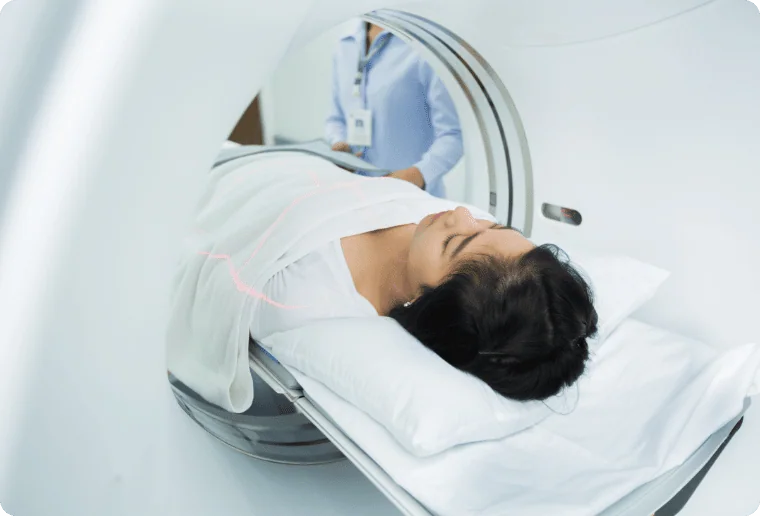
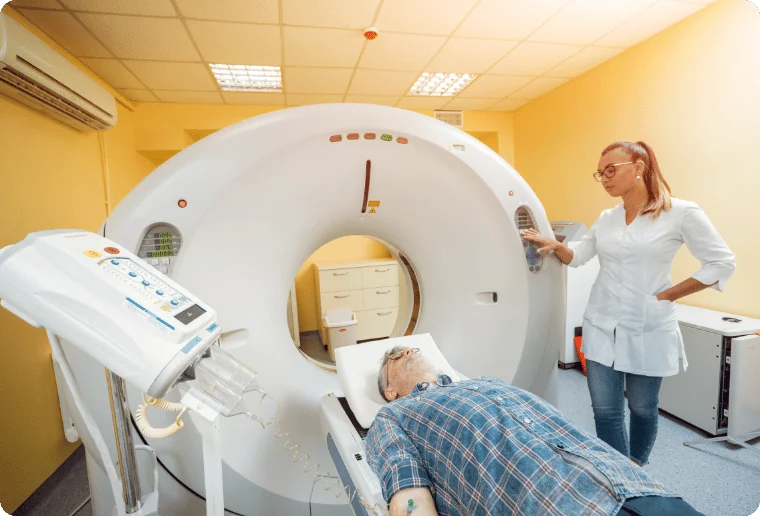
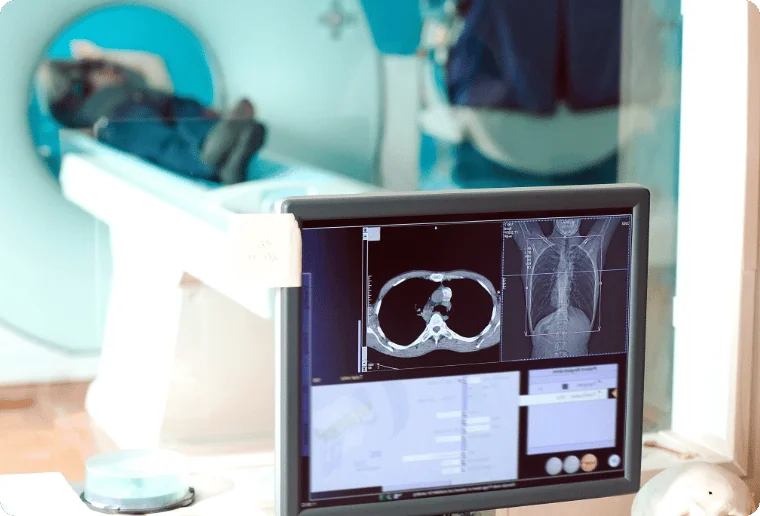
        Some of the tools used to diagnose the stage of mesothelioma include CT, MRI, and PET scans.

        CT

        A Computed Tomography (CT) scan generates several x-ray images doctors put together to make a single 3D image of the chest or stomach. Doctors use CT scans to determine if a tumor has spread to the chest wall or diaphragm.

        MRI

        Doctors use a Magnetic Resonance Imaging (MRI) scan to find out if mesothelioma has spread from the lining of the lungs, the pleura, to the chest wall, lining of the heart, or nearby organs.

        PET

        Positron Emission Tomography (PET) Scan: A PET scan is the best method to determine if mesothelioma has spread to other parts of the body. Doctors can even use it to find out if a tumor has spread to lymph nodes that are far from where the mesothelioma first appeared.

        Frequently Asked Questions About Mesothelioma Stages

        What are the 4 stages of mesothelioma?

        The four stages describe how far pleural mesothelioma, a cancer in the lining of the lungs, has spread. Stage 1 means it sits in that lining on one side of the chest. The lymph nodes, small glands that filter fluid, are clear. Stage 2 means a thicker tumor, or growth into nearby fat, and sometimes nodes on the same side. Stage 3 means growth into nearby structures, or nodes on the other side. Stage 4 means it has reached distant places such as the abdomen or the bones.

        Do all types of mesothelioma have 4 stages?

        No. Only pleural mesothelioma, the type in the lining of the lungs, has a formal four-stage system. For peritoneal mesothelioma, which grows in the lining of the abdomen, surgeons often use the Peritoneal Cancer Index. That score runs from 0 to 39 and adds up how much tumor sits across 13 areas of the belly. A lower score points to a better outlook and a better chance that surgery is an option. Pericardial and testicular mesothelioma have no formal stages at all.

        What staging system do doctors use for mesothelioma?

        Doctors stage pleural mesothelioma with the TNM system. It rates the tumor (T), the lymph nodes (N) and spread to distant parts of the body (M). Those three ratings combine into stage 1, 2, 3 or 4. In the US, the AJCC Version 9 system applies to cases diagnosed on or after January 1, 2026. It measures tumor thickness on a CT scan. Cases diagnosed before that date were staged with the 8th edition, so an older report may look different.

        How do doctors decide what stage the mesothelioma is?

        Doctors work out the stage from scans and tissue samples, not from one single test. CT, PET and MRI scans show how far the tumor has spread. Doctors may also look inside the chest or abdomen with a small camera, or take a sample from lymph nodes. The stage set before surgery is called the clinical stage. If surgery is done, the tissue removed can give a more exact pathological stage. The stage recorded at diagnosis stays the same even if the cancer later grows.

        What is the difference between stage 2 and stage 3 mesothelioma?

        Stage 2 and stage 3 both mean the cancer has grown beyond its starting point, but stage 3 has gone further. In stage 2, the tumor is thicker or has grown into the fat in the mid chest. It may also reach one spot on the chest wall, or nodes on the same side. Stage 3 means a much thicker tumor, or growth into bone, the heart sac or nearby organs. It can also mean nodes on the opposite side. Surgery may still be considered in stage 2 and some stage 3 cases.

        What is stage 4 mesothelioma?

        Stage 4 mesothelioma is the most advanced stage. It means the cancer has spread to distant parts of the body. That can include the other lung, the lining of the abdomen, the bones or the liver. You may hear it called metastatic, which means the same thing. Stage 4 does not mean treatment is over. Surgery is not usually possible, so the plan shifts to slowing the cancer and keeping your loved one comfortable.

        What are the symptoms of stage 4 mesothelioma?

        Stage 4 mesothelioma symptoms usually include worsening shortness of breath, chest or back pain, a stubborn cough, deep tiredness, poor appetite and weight loss. Fluid often builds up around the lung again after it is drained, which makes breathing harder. Some people also have trouble swallowing or a hoarse voice. Most of these symptoms can be eased, so tell the care team early. Palliative care, a team that focuses on comfort, can start at diagnosis and run alongside cancer treatment.

        How long can you live with stage 4 mesothelioma?

        Survival with stage 4 mesothelioma varies widely in both directions. In the trial behind the 2024 FDA approval of pembrolizumab, an immunotherapy drug, added to chemotherapy, median survival was 17.3 months. Chemotherapy alone gave 16.1 months. A median of 17.3 months means half the people in that group lived longer than that and half lived less. Those patients had pleural mesothelioma that surgery could not remove, which is broader than stage 4 alone. It is not a prediction for your loved one.

        Which treatments are approved for advanced mesothelioma?

        Two immunotherapy combinations are approved in the US as first treatment when pleural mesothelioma cannot be removed by surgery. Immunotherapy helps the body's own immune system attack cancer. Nivolumab with ipilimumab was approved in 2020, and pembrolizumab added to chemotherapy was approved in 2024. Chemotherapy on its own, using pemetrexed with a platinum drug, is still an option. Which one fits depends on the cell type and your loved one's health, so ask the team what applies.

        What are mesothelioma survival rates by stage?

        Survival is usually reported by how far the cancer had spread, not by numbered stage. For US pleural mesothelioma found from 2015 to 2021, five-year relative survival was about 23 percent for localized disease. It was 15 percent when the cancer had reached nearby tissue or lymph nodes, and 11 percent once it had spread further. Relative survival compares people with mesothelioma to people of the same age in the general population. These figures cover people diagnosed before the newest treatments were in wide use.

        Does finding mesothelioma early mean it can be cured?

        Mesothelioma is usually not curable, and finding it early does not change that on its own. A small number of people have disease that is still limited to one area. For them, a specialist center may give treatment aimed at long-term control. Only a specialist can say whether that applies to your loved one. What an early stage does change is the options, because surgery is usually only considered in the earlier stages. Treatment has improved, some people live for years, and trials are open.

        What happens in the final stages of mesothelioma?

        In the final stages of mesothelioma, most people become much more tired and sleep for longer stretches. They eat and drink very little, and shortness of breath usually gets worse. Pain and confusion are common, and in the last days breathing often turns irregular and the hands and feet feel cool. This is hard to watch, but most of these symptoms can be controlled. Palliative care aims at comfort and can be given at any stage. Hospice teams manage pain and breathlessness well, often at home.

        How long do the final stages of mesothelioma last?

        There is no exact timeline for the final stages of mesothelioma. An honest doctor will give you a range rather than a date. Hospice care, which focuses on comfort near the end of life, is offered when a doctor expects six months or less. The last weeks often bring much more sleeping and far less eating. Doctors' estimates tend to be too hopeful, so ask for a range and ask what to watch for. A palliative care team can keep most symptoms controlled throughout.

        What stage is mesothelioma usually diagnosed at?

        Most people are diagnosed at a later stage, after symptoms have already started. Early signs such as breathlessness, a cough or pain in the side are easily mistaken for more common problems. Most people with mesothelioma have symptoms for a few months before they get a diagnosis. There is also a long gap, often decades, between asbestos exposure and the first sign of illness. No major medical group currently recommends screening people who were exposed.

        How does the stage decide which treatments are offered?

        The stage tells the team whether surgery is worth considering. Surgery is only discussed in the earlier stages, and it is not right for most people. MARS 2, a trial of 335 patients, tested lung-sparing surgery added to chemotherapy. Median survival was 19.3 months, against 24.8 months for chemotherapy alone. Specialist centers still consider surgery for a few people with early disease of the epithelioid cell type, which has the best outlook. Otherwise immunotherapy or chemotherapy comes first, so ask about clinical trials and a second opinion.